When the water drops fast: cold fronts on the Gulf and Florida coasts
Every drop of 3°F or more within three days, beyond the normal seasonal change, at 37 beaches in Florida and on the Gulf coast, from ten years of daily satellite data.
Sea water usually changes slowly, a fraction of a degree a day. But on the coasts of Florida and the Gulf, a few times a year it drops fast: 3°F or more in three days. On this page those are counted at 37 beaches over 10 years: 1707 drops in all, 62% of them between November and March, the season when cold fronts sweep down from the north with cold air and strong wind.
When they happen
Drops per beach per year, by month.
The biggest events
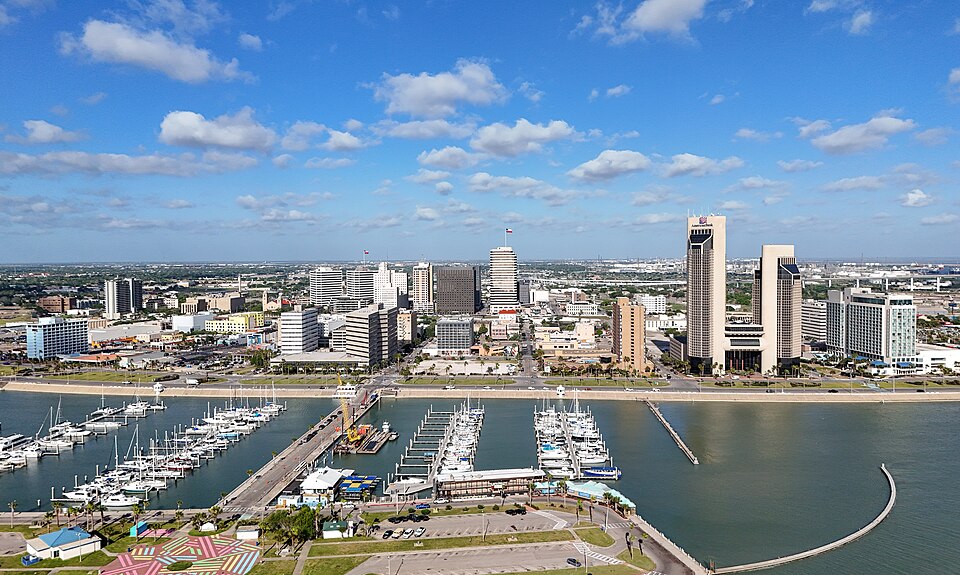
Biggest of all: at Corpus Christi the water went from 74°F on November 24, 2022 to 60°F three days later. The events below hit the most beaches at once.
| Start | Beaches | Biggest drop | Season |
|---|---|---|---|
| September 29, 2022 | 25 of 37 | Sanibel: 87° to 79°F | hurricane season |
| December 25, 2022 | 24 of 37 | Corpus Christi: 67° to 56°F | cold-front season |
| February 21, 2025 | 22 of 37 | Galveston: 64° to 58°F | cold-front season |
| November 12, 2025 | 22 of 37 | Clearwater: 73° to 68°F | cold-front season |
| March 5, 2018 | 22 of 37 | Pensacola Beach: 70° to 65°F | cold-front season |
Not every drop is a cold front. The event that reached the most beaches, starting September 29, 2022, came in hurricane season: storms crossing the Gulf mix cooler water up from below. After it, the water took a median of 29 days to get back to its earlier level against the usual value.
What it means for a trip
For a trip this means the number on the beach page can sit well under the usual value for the date for a week or more. Measured against the usual value for the date, the water was back to where it stood within 12 days in half the cases, and within 35 days in nine out of ten. Each beach page shows the latest value next to the usual one, so a recent drop is easy to spot.
Some beaches see far more of these than others. Corpus Christi, Clearwater, Clearwater Beach average 8.2 to 7.1 a year; Miami Beach, Fort Lauderdale, Fort Lauderdale Beach 0.6 to 0.4. Shallow water near shore cools fastest; the deep water close to shore off southeast Florida much less.
Source: NASA/JPL MUR SST v4.1 daily satellite analysis at the sea cell nearest each beach; see the methods. Related: warmest Florida beaches in winter, Gulf side vs Atlantic side.